
October 22, 2026
 Building the region’s future workforce starts well before a student fills out a job application. It starts with helping young people understand the opportunities around them and how what they’re learning today connects to those careers.
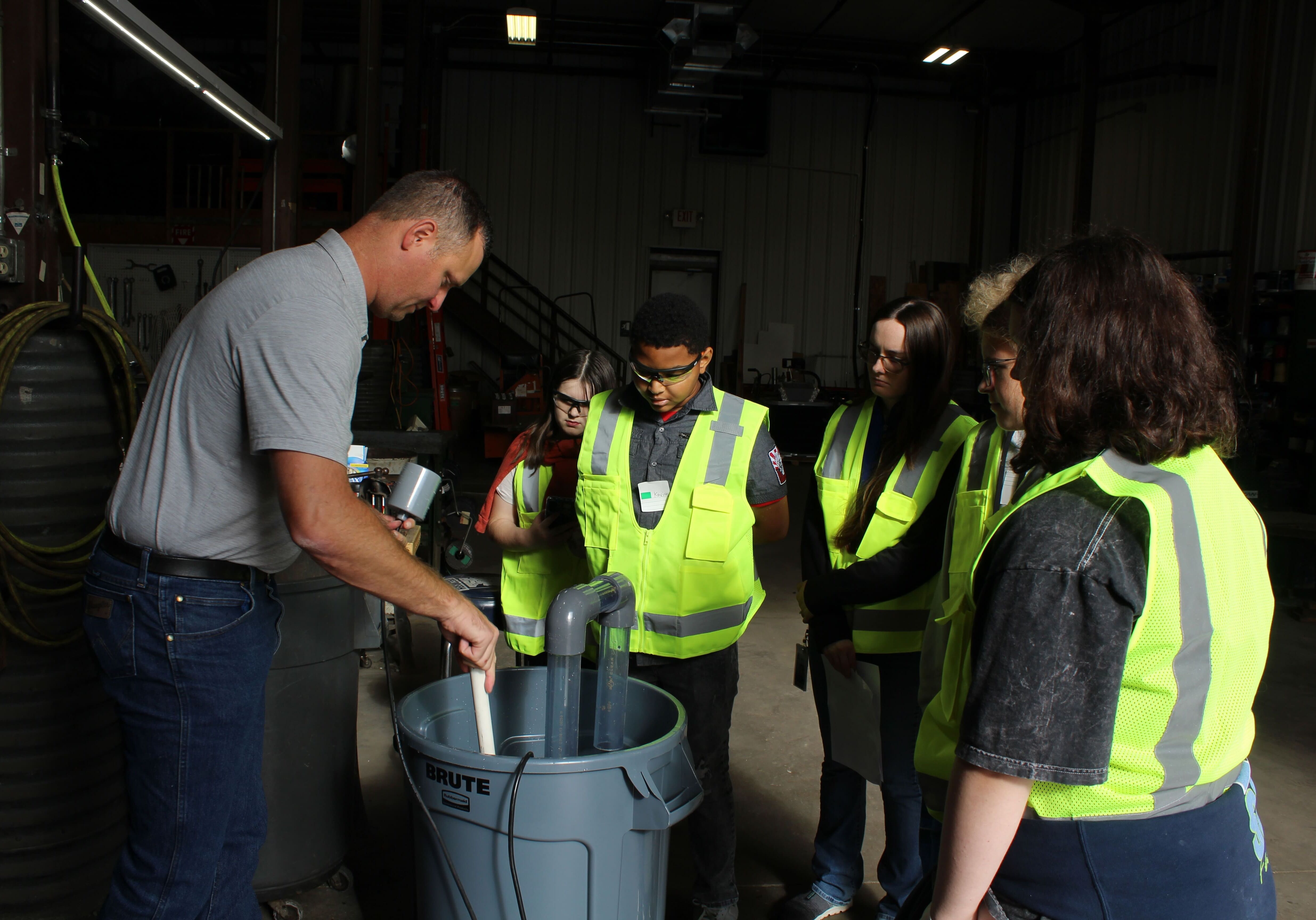
On Oct. 21 and 22, about 875 seventh and eighth graders from 29 schools visited workplaces across southwest Missouri through 7th & 8th Graders Go to Work. For participating employers, it was an opportunity to introduce their industries to students who may become future employees. For students, it was a chance to see what a future in the Ozarks could look like.
 Connecting the classroom to careers
 Connecting the classroom to careers
Seventh and eighth grade is an important time for career exploration. Students are beginning to make choices about the classes and activities they’ll pursue in high school. Seeing how math, science and reading apply on the job can help those choices feel more meaningful.
Early exposure also introduces students to careers they may never have considered, especially those who have limited opportunities to learn about different occupations through family or other connections. It’s hard to imagine yourself in a job you’ve never seen.
Employers bring the work to life
Hands-on experiences are central to the program. In past years, students have built Lego tractors from actual work orders, filled connectors for satellite and rocket components, responded to simulated emergency medical calls, handled fire hoses, and practiced suturing and wound care in simulation labs.
This year’s 24 hosts represented manufacturing, health care, first responders, tourism, hospitality, education, transportation, engineering, construction and banking. Together, they introduced students to the range of careers that support the Ozarks economy.
By opening their doors and sharing their expertise, participating employers help students connect familiar school subjects with real skills, workplaces and career paths.
A regional investment in the future
Since 2017, 7th & 8th Graders Go to Work has connected education and business through a partnership between the Springfield Area Chamber of Commerce, the Agency for Teaching, Leading, and Learning at Missouri State University, and the Missouri Department of Elementary & Secondary Education.
“I hope students leave believing that their future is full of possibilities,” said Karen Kunkel, workforce development manager for the Springfield Area Chamber of Commerce. “Even if they don’t know exactly what career they want to pursue, I want them to see opportunities they may not have previously considered and recognize that many different paths lead to success.”
For the Chamber and its regional partners, these connections are part of a long-term commitment to workforce development. A workplace visit today can help a student choose a class, explore a training program or discover a career worth pursuing here at home.