
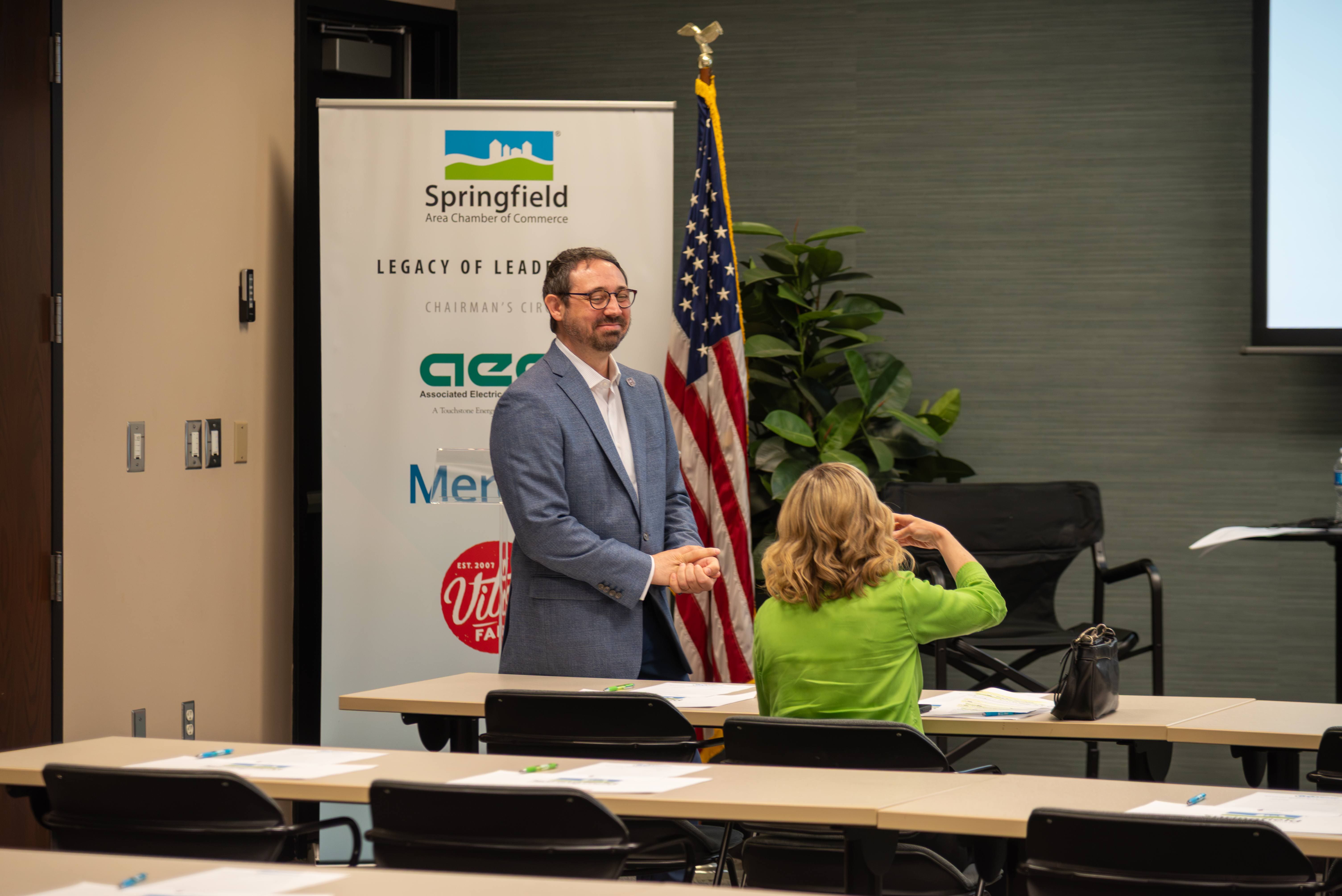
Helping small business owners strengthen their operations and plan for the future was the focus of the Chamber’s September 29 program, “Built to Last: Preparing Your Business for What’s Next.” Part of the 60 Minutes to Success series, the session connected members with local expertise and practical steps to protect their businesses and prepare for change.
The Chamber brought these perspectives together to help small business owners understand where to start and what they can do now to prepare for an unexpected absence or a future transition.
Craig Wright of Strategic Financial moderated the conversation with Lance Coffman of Missouri State University’s efactory, Sativa Boatman of Assertion Law Firm and Joe Howard of Kingsley Group Business Brokers. The panel brought together operational, legal, and financial perspectives on business readiness.
Coffman explained that business health extends beyond revenue and profitability. The Value Builder assessment, offered through the efactory, evaluates eight drivers of business value and helps owners identify opportunities for improvement. Dependence on a single customer, supplier, or employee can create vulnerabilities, while recurring revenue can strengthen stability.
“You have to start with a baseline,” said Coffman. He offered the assessment at no charge to help owners understand where their business stands and where to focus on improvements.
For owners wondering whether their business could operate without them for 30 days, Coffman recommended a practical exercise: list the tasks, decisions and relationships they manage, then rate how confidently someone else could take over each responsibility. Having that person independently assess the same list can reveal gaps in delegation, documentation and training. Owners can also use the exercise with key employees.
Boatman emphasized preparing legal documents before an emergency and ensuring trusted individuals know where to find them. She discussed how a durable power of attorney can authorize someone to act when an owner is incapacitated, with provisions tailored to the owner’s circumstances and business needs.
She also encouraged owners to review operating agreements and ownership records. For businesses with multiple owners, a buy-sell agreement establishes what happens when an owner leaves, becomes disabled or dies. Family-owned businesses should discuss who wants to take over and how the transition will affect relatives who are not involved. An attorney and CPA can help document those intentions and evaluate the implications of transferring ownership.
Howard highlighted the importance of consistent performance, an established reputation, and clean accounting records to prospective buyers. Customer concentration and incomplete records can reduce value or make a business harder to sell. Understanding financial statements and recognizing areas for improvement can help owners prepare well before a transaction.
He described valuation as a tool for planning, even when a sale is years away. Reviewing historical tax returns, current financial statements and comparable transactions helps owners assess whether their expectations align with the market and identify improvements. Howard recommended updating valuations annually and working with a CPA to understand the tax implications of a sale.
Wright reinforced the importance of connecting business decisions with the owner’s personal financial goals. The panel encouraged owners to start with what they already have in place, identify gaps, and take a manageable next step, whether completing an assessment, documenting responsibilities or meeting with an advisor.
Connecting members with local expertise and practical guidance is one way the Chamber supports small businesses. Helping owners prepare for change strengthens businesses that provide jobs and contribute to the region’s economy.