Growth is real. So is the housing challenge.
Nearly 400 people filled the DoubleTree’s Glendalough Conference Center on Wednesday, Aug. 19, for a sold-out 2026 SBDC Economic Outlook. The annual event connected national economic trends to the decisions businesses across the Ozarks are making today — and highlighted two local challenges that will shape the region’s continued growth: housing and workforce.
Hosted by the Springfield Business Development Corporation (SBDC), the Economic Outlook brings national economic insight together with perspectives from local business and community leaders.
The regional economy is outperforming
Charles S. Gascon, economist and assistant vice president at the Federal Reserve Bank of St. Louis, opened the economic portion of the program with encouraging news for the Ozarks.
The regional economy grew roughly 3% year over year, outpacing both state and national averages. That distinction matters. While national numbers can mask significant differences among local economies, Springfield continues to grow.
Gascon attributed much of the national economy’s resilience to strong business investment in artificial intelligence. Hiring has slowed, but labor-force growth has slowed as well, helping keep unemployment steady. He also pointed to similar wage gains for workers who change jobs and those who stay with their employers — a sign that workers are not being forced to change jobs simply to keep up.
Growth doesn’t always feel like growth
Strong economic numbers don’t necessarily translate into more purchasing power for households.
Over the past five years, prices have increased about 20%, while wages have risen by roughly the same amount. Real wage growth has remained essentially flat since 2021.
That pressure shows up in household spending. By 2025, about 75% of household spending went toward non-discretionary needs, leaving less room for the discretionary spending that signals greater financial flexibility.
Gascon also noted that economic policy uncertainty is at its highest level since the 1960s. If uncertainty eases, 2027 could bring additional economic momentum. If it increases, recession risks could rise. For now, financial conditions continue to point cautiously toward growth.
Housing is becoming a competitive issue
The national economic outlook set the stage for a discussion about what that growth means here at home.
Chamber President Matt Morrow introduced local housing data, highlighting a shift in one of Springfield’s longtime competitive advantages: affordability. The region’s housing costs now compare less favorably with nearly every nearby Midwestern community.
Whether that shift proves temporary or signals a longer-term trend remains unclear. Either way, housing affordability and availability increasingly affect the region’s ability to attract investment and workers.
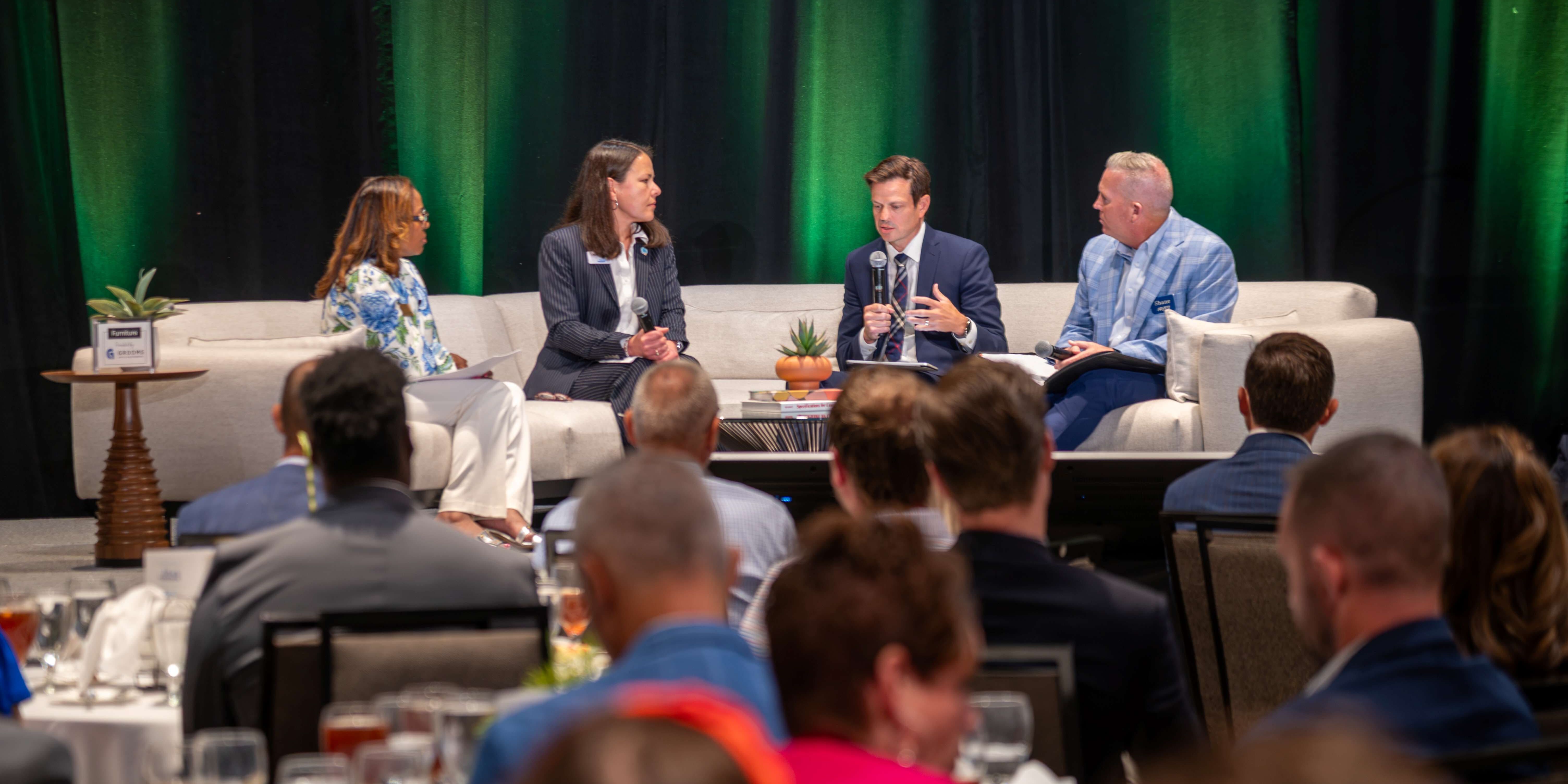
Those issues took center stage during a panel moderated by Matuschka Briggs of the Federal Reserve Bank of St. Louis. Panelists Shane Cowger, president of Arvest Bank in Springfield; Ryan Murray, CEO of R.B. Murray Company; and Stephanie Hurt, managing director with Forvis Mazars Private Client, brought perspectives from banking, real estate, and professional services.
Cowger emphasized the need for more housing stock and the infrastructure needed to support higher-density residential development. Both will be important to attracting new workers and retaining those already here.
Gascon’s data reinforced the concern: residential investment declined in 2025 even as business investment surged. Sustained residential investment will be critical to supporting the region’s long-term growth.
Workforce remains a critical piece
The panel also highlighted the connection between housing and workforce development.
Hurt said employers continue to have the most difficulty filling high-skill positions. Retaining younger workers also remains a priority as they consider opportunities in larger cities.
Still, local business leaders continue to see opportunity in the market.
Murray noted that major projects continue to move forward despite rising construction costs and tighter margins. Businesses and developers, he said, do not take on that risk unless they believe in the market.
Growth creates opportunity — and responsibility
The message from this year’s Economic Outlook was clear: the fundamentals remain strong, but growth does not happen on its own.
The region needs housing that supports a growing workforce. Employers need skilled workers to fill increasingly specialized positions. And continued investment will require the infrastructure and business climate to support that growth.
Those are challenges the Chamber, SBDC and regional partners are working to address every day. The opportunity is significant — and the region’s economic performance shows why the work is worth doing.
Thank you to Forvis Mazars, presenting sponsor of the 2026 SBDC Economic Outlook.